
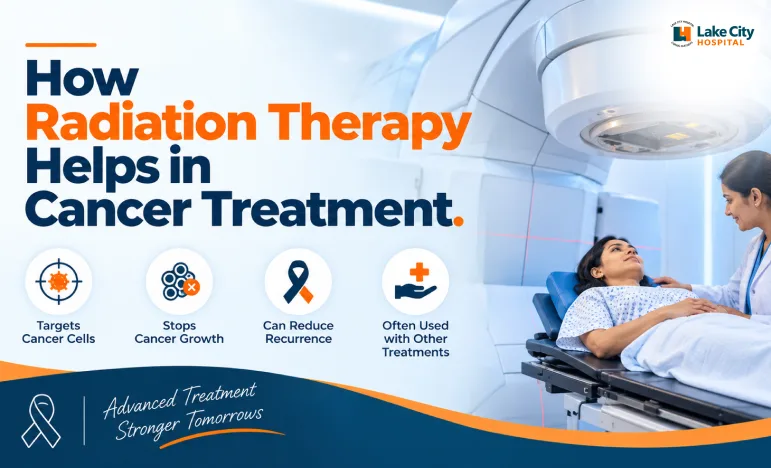
Radiation therapy, also called radiotherapy, is an important cancer treatment that uses high-energy radiation to damage the DNA of cancer cells, helping to kill them or slow their growth. It can be used alone or along with other treatments such as surgery, chemotherapy, immunotherapy or targeted therapy, depending on the type and stage of cancer.
Radiation therapy can be used with different treatment goals. In some patients, it may be given with the aim of curing cancer, while in others it may help shrink a tumour before surgery, destroy remaining cancer cells after surgery, prevent cancer from returning, or relieve symptoms caused by advanced cancer.
If you or a family member has been advised radiation therapy, understanding how it works, when it is recommended and what to expect can help you prepare for treatment.
For cancer evaluation and treatment in Bhopal, patients can consult the oncology team at Lake City Hospital for an individualised treatment plan.
What Is Radiation Therapy?
Radiation therapy is a cancer treatment that uses high-energy radiation to kill cancer cells or slow their growth. The radiation damages the genetic material, or DNA, inside cancer cells. When the damage is too severe to repair, the cancer cells stop dividing or die.
Radiation can also affect nearby healthy cells. However, healthy cells are generally better able to repair radiation-related damage than cancer cells. Modern radiation treatment planning aims to deliver the prescribed dose accurately to the tumour while limiting exposure to surrounding healthy tissues.
How Does Radiation Therapy Help Treat Cancer?
Radiation therapy can help control cancer in several ways:
- Destroy cancer cells: High-energy radiation can damage the DNA of cancer cells beyond repair.
- Shrink tumours: Radiation can reduce tumour size before another treatment or when a tumour is causing symptoms.
- Prevent recurrence: Radiation may be used after surgery to destroy cancer cells that may remain in the treatment area.
- Support other treatments: Radiation may be combined with chemotherapy or other cancer treatments.
- Relieve symptoms: Palliative radiation can help reduce symptoms such as pain caused by cancer that has spread to the bones.
Radiation does not usually destroy cancer cells immediately. The DNA damage accumulates, and cancer cells may continue to die for weeks or months after radiation treatment has ended.
When Is Radiation Therapy Recommended?
Radiation therapy may be recommended depending on:
- Type of cancer
- Stage of cancer
- Size and location of the tumour
- Whether the cancer has spread
- Overall health of the patient
- Previous cancer treatments
- Treatment goals
- Whether surgery, chemotherapy or other treatments are also planned
Radiation treatment is highly individualised. The radiation oncologist determines whether it is appropriate and selects the dose, technique and treatment schedule based on the patient’s specific condition.
Radiation Therapy Before Surgery
Radiation may sometimes be given before surgery to shrink a tumour and make it easier to remove.
It may be combined with chemotherapy in certain cancers, depending on the treatment protocol.
Radiation Therapy After Surgery
Radiation may be recommended after surgery when there is a risk that microscopic cancer cells remain in the treatment area.
The goal may be to reduce the risk of local recurrence.
Radiation Therapy Along With Chemotherapy
Some cancers are treated using chemoradiation, where chemotherapy and radiation are given as part of the same treatment plan.
The combination can be useful for certain cancers because chemotherapy may make cancer cells more sensitive to radiation.
Radiation Therapy for Symptom Relief
Radiation therapy can also be used as palliative treatment when cancer cannot be cured but symptoms need to be controlled.
For example, radiation can be used to relieve pain caused by cancer that has spread to the bones and can also help reduce symptoms caused by a tumour pressing on nearby structures.
Need an oncology consultation in Bhopal?
Patients diagnosed with cancer can discuss their treatment options with the oncology team at Lake City Hospital, Bhopal, and understand whether radiation therapy may be appropriate as part of their overall cancer treatment plan.
Consult Lake City Hospital
Types of Radiation Therapy
There are different forms of radiation therapy. The choice depends on the cancer type, tumour location and treatment objective.
1. External Beam Radiation Therapy
External beam radiation therapy (EBRT) uses a machine outside the body to deliver high-energy radiation to the cancer.
The machine is positioned around the patient and directs radiation beams towards the treatment area. It is a local treatment, meaning radiation is directed at a specific area rather than the entire body.
External beam radiation may use different types of radiation, including:
- Photons
- Electrons
- Protons
Advanced planning and imaging can help the treatment team accurately target the tumour and reduce radiation exposure to nearby normal tissues.
2. Brachytherapy
Brachytherapy is a type of internal radiation therapy in which a radiation source is placed inside the body, in or near the tumour.
It can be used for selected cancers, including certain cancers of the:
- Cervix
- Prostate
- Breast
- Head and neck
- Eye
Depending on the treatment, the radiation source may remain in place for minutes, days or, in some cases, permanently.
3. Systemic Radiation Therapy
Some forms of radiation treatment use radioactive substances that travel through the bloodstream to reach specific cancer cells.
Examples include certain radioactive iodine treatments for thyroid cancer and other targeted radionuclide therapies used for selected cancers.
The type of radiation therapy is selected according to the cancer and the patient’s individual treatment requirements.
How Is Radiation Therapy Planned?
Radiation therapy involves detailed planning before the first treatment.
The treatment team may use:
- Physical examination
- CT scans
- MRI or PET imaging when appropriate
- Tumour location and size
- Previous treatment information
- Computer-based treatment planning
The goal is to determine the appropriate radiation dose, treatment area and treatment schedule.
During external beam radiation therapy, imaging and treatment planning help the team position the patient consistently and target the tumour accurately.
What Happens During Radiation Therapy?
For external beam radiation therapy, the patient generally:
- Lies on a treatment table.
- Is positioned carefully according to the treatment plan.
- May use customised supports, moulds or positioning devices to remain still.
- The radiation machine moves around the body or treatment area.
- Radiation is delivered from carefully planned directions.
- The patient is monitored by the radiation therapy team.
The actual radiation delivery may take only a few minutes, although the complete appointment can take longer because positioning and preparation are important.
External beam radiation therapy is usually provided as an outpatient treatment, although this depends on the patient’s condition and treatment plan.
How Many Radiation Therapy Sessions Are Needed?
The number of radiation therapy sessions varies from patient to patient.
Treatment may be given:
- Once a day over several weeks
- In fewer sessions using selected treatment schedules
- In a single treatment for some palliative situations
- According to a specialised schedule based on the cancer type and treatment goal
The total number of sessions depends on factors such as the type and stage of cancer, tumour size and location, radiation dose and overall treatment plan.
Therefore, patients should not compare their treatment schedule with another person’s because radiation plans are highly individualised.
Does Radiation Therapy Hurt?
External beam radiation therapy itself is generally painless. Patients do not normally feel, see or smell the radiation while it is being delivered.
However, side effects may develop during or after treatment depending on the part of the body being treated and the radiation dose.
Side Effects of Radiation Therapy
Radiation can affect healthy cells located near the treatment area, which can lead to side effects. The effects vary depending on the body part treated, radiation dose, treatment schedule and whether other cancer treatments are being given.
Common side effects may include:
- Fatigue
- Skin changes in the treated area
- Hair loss in the treatment area
- Nausea or vomiting
- Changes in appetite
- Mouth or throat problems
- Difficulty swallowing
- Diarrhoea
- Urinary or bladder symptoms
Not every patient experiences the same side effects.
Fatigue During Radiation Therapy
Fatigue is one of the most common side effects of radiation therapy. It may develop gradually during treatment and can vary from person to person.
Patients should discuss persistent or severe fatigue with their oncology team.
Skin Changes
Radiation treatment can cause skin changes in the area being treated.
Depending on the treatment site, patients may experience:
- Redness
- Dryness
- Irritation
- Tenderness
- Changes in skin texture
Patients should follow the specific skin-care instructions provided by their radiation oncology team.
Side Effects Based on Treatment Area
Side effects can vary significantly according to where radiation is delivered.
For example:
- Head and neck: Mouth problems, taste changes and difficulty swallowing may occur.
- Chest: Cough, skin changes or swallowing problems may occur.
- Abdomen: Nausea, vomiting, diarrhoea or bowel symptoms may occur.
- Pelvis: Urinary, bowel, sexual or fertility-related effects may occur.
- Brain: Fatigue, headache, nausea and other neurological effects may occur.
Some side effects improve after treatment ends, while others may persist or appear later. The risk depends on the treatment area and other individual factors.
Is Radiation Therapy Safe?
Radiation therapy is a well-established cancer treatment, but it is not completely free of risks.
The treatment team carefully plans the radiation dose and treatment area to treat the cancer while limiting exposure to nearby healthy tissues.
Modern radiation techniques allow radiation to be targeted more precisely, although some healthy tissue may still receive radiation and side effects can occur.
Patients should discuss the expected benefits, possible side effects and alternative treatment options with their oncologist before starting treatment.
Does Radiation Therapy Make You Radioactive?
For external beam radiation therapy, the radiation comes from a machine outside the body, and the patient does not become radioactive after the treatment session. Patients can generally be around family members, including children and pregnant women, after external beam treatment.
The situation can be different with certain forms of internal or systemic radiation therapy, where specific safety precautions may be required. The treating team will provide individual instructions.
Radiation Therapy and Other Cancer Treatments
Radiation therapy may be used alone or as part of a combination treatment plan.
Depending on the cancer, it may be combined with:
- Surgery
- Chemotherapy
- Immunotherapy
- Targeted therapy
- Hormone therapy
- Other cancer treatments
The combination depends on the cancer type, stage, molecular characteristics where relevant, treatment goals and the patient’s overall health.
Radiation Therapy for Advanced Cancer
Radiation therapy is not limited to cancers that can be treated with curative intent.
In advanced cancer, it may be used to control tumour growth or relieve symptoms. For example, radiation may help manage pain from cancer that has spread to the bones.
The goal in these situations is often symptom control and maintaining quality of life.
Cancer Treatment at Lake City Hospital, Bhopal
Cancer treatment often requires a multidisciplinary approach, and the appropriate treatment depends on the type and stage of cancer.
Lake City Hospital in Kasturba Nagar, Bhopal, is a hospital and cancer treatment centre where patients can seek evaluation and discuss appropriate cancer treatment options.
If you or a family member has been diagnosed with cancer, speak with an oncology team about whether radiation therapy, surgery, chemotherapy or a combination of treatments is appropriate for the condition.
When Should You Consult an Oncologist?
You should discuss your condition with an oncology specialist if:
- You have recently been diagnosed with cancer.
- Surgery has been recommended and radiation therapy may be required before or after it.
- Your cancer has returned.
- Cancer has spread to another part of the body.
- You have symptoms caused by a tumour.
- You have been advised to consider radiation therapy.
- You want to understand the benefits and possible side effects of radiotherapy.
Early discussion with the oncology team can help patients understand their treatment options and plan the next steps.
Looking for cancer treatment and oncology consultation in Bhopal?
Book a Consultation at Lake City Hospital
Radiation Therapy: Key Takeaways
- Radiation therapy uses high-energy radiation to damage the DNA of cancer cells.
- It can kill cancer cells or slow their growth.
- Radiation therapy may be used before or after surgery, with other cancer treatments, or for symptom relief.
- External beam radiation therapy delivers radiation from a machine outside the body.
- Brachytherapy delivers radiation from a source placed in or near the tumour.
- The number of radiation sessions depends on the cancer and treatment plan.
- Side effects depend largely on the area being treated and the radiation dose.
- External beam radiation does not make a patient radioactive.
- Radiation treatment should always be planned and monitored by an appropriate oncology team.
FAQs About Radiation Therapy for Cancer
What is radiation therapy in cancer treatment?
Radiation therapy is a cancer treatment that uses high-energy radiation to damage the DNA of cancer cells, causing them to stop dividing or die.
How does radiation therapy kill cancer cells?
Radiation damages the DNA of cancer cells. When the damage is too severe for the cells to repair, they stop dividing or die. The effects can continue for weeks or months after treatment ends.
Is radiation therapy used before or after surgery?
Radiation therapy can be used before or after surgery, depending on the type and stage of cancer and the overall treatment plan.
Is radiation therapy painful?
The delivery of external beam radiation is generally painless. However, side effects may develop during treatment depending on the area being treated.
How long does radiation therapy take?
The radiation itself may be delivered in a few minutes during an external beam treatment session, but the complete appointment can take longer because positioning and preparation are required.
How many sessions of radiation therapy are needed?
The number of sessions varies according to the type and stage of cancer, treatment goal, tumour location, radiation dose and treatment technique. Some patients receive treatment over several weeks, while selected situations may require fewer sessions.
What are the common side effects of radiation therapy?
Common side effects can include fatigue, skin changes, hair loss in the treated area, nausea, vomiting and symptoms related to the part of the body being treated.
Does radiation therapy make you radioactive?
External beam radiation therapy does not make you radioactive. Certain forms of internal or systemic radiation therapy may require temporary safety precautions, which your treatment team will explain.
Can radiation therapy cure cancer?
Radiation therapy can be used with curative intent for some cancers, but whether it can cure a particular cancer depends on factors such as cancer type, stage, tumour location and the overall treatment plan.
Can radiation therapy be used for advanced cancer?
Yes. Radiation therapy can be used in advanced cancer to control tumour growth or relieve symptoms, including pain caused by cancer that has spread to the bones.
Where can I get cancer treatment in Bhopal?
Patients looking for cancer treatment in Bhopal can consult the oncology team at Lake City Hospital, Kasturba Nagar, Bhopal, to discuss diagnosis, treatment options and whether radiation therapy may be appropriate.